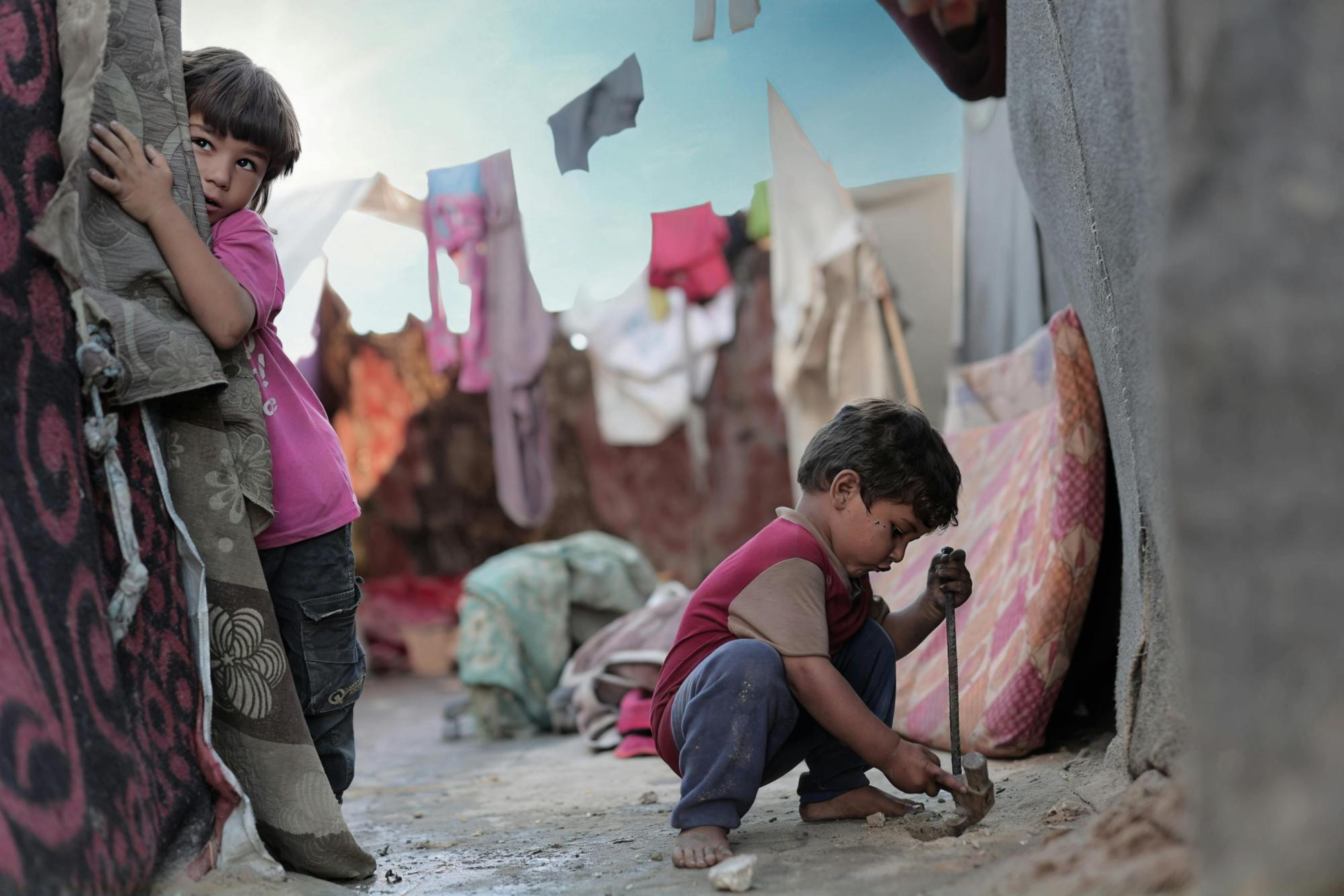
Gaza, a narrow strip of land along the Mediterranean between Israel and Egypt, is home to over two million Palestinians. Despite its small size—just 25 miles long—Gaza faces one of the world’s most enduring humanitarian crises. Civilians contend with blockades, displacement, limited access to food, water, and electricity, and repeated exposure to violence.
The Roots of the Crisis
The origins of Gaza’s struggles stretch back more than 70 years. After the Holocaust, Jewish survivors fled Europe, many settling in Palestine. The United States and Britain supported the creation of Israel, and in 1947 the United Nations approved a partition plan dividing the land into Jewish and Arab states. Israel accepted the plan, while many Arab leaders rejected it, triggering mass displacement.
The Nakba, meaning “catastrophe” in Arabic, forced over 700,000 Palestinians from their homes. The event remains one of the largest refugee crises in modern history and drew global attention to human rights and displacement
Occupation and Conflict
From 1948 to 1967, Gaza was under Egyptian administration. The territory was governed militarily, with refugee camps established to house the displaced population. Poverty and overcrowding were widespread.
In 1956, during the Suez Crisis, Israel, Britain, and France invaded Egypt after the nationalization of the Suez Canal. International pressure, particularly from the United States, forced the withdrawal of these forces. The conflict caused thousands of deaths of civilians and lasting economic damage, as well as a four-month Israeli occupation of the Gaza Strip, resulting in heavy casualties and displacement of Palestinians.
Israel captured Gaza in 1967 during the Six-Day Conflict which was a brief but transformative conflict fought in June 1967, between Israel and the neighboring Arab states of Egypt, Syria, and Jordan which began decades of military control. Since then, Gaza has experienced repeated escalations of violence and humanitarian challenges.
Timeline of Major Events (1917–1967)
- 1917 – Balfour Declaration: Britain supports a Jewish homeland.
- 1939–1945 – Holocaust: Hundreds of thousands of Jewish refugees flee Europe.
- 1947 – UN Partition Plan: Divide Palestine into Jewish and Arab states.
- 1948 – Arab-Israeli War: Civil War in response to UN Partition Plan.
- 1948 – Nakba: Over 700,000 Palestinians displaced.
- 1948–1967 – Egyptian Administration: Gaza governed militarily; refugee camps created.
- 1956 – Suez Crisis: Israel, Britain, France invade; U.S. forces withdrawal.
- 1967 – Six-Day Conflict: Israel captures Gaza.
Politics in Gaza and Israel
Israel’s government is shaped by Zionist ideology, with a strong focus on maintaining a Jewish homeland and protecting national security. Palestinian leadership is divided, with Hamas governing Gaza and Fatah leading parts of the West Bank, which weakens political unity and makes peace efforts more difficult. The goals of the two main Palestinian leadership entities, Hamas in Gaza and Fatah in the West Bank, generally aim for Palestinian statehood. Since the 2023 war, ongoing violence, failed ceasefires, and continued military operations have made life even harder for civilians in Gaza and increased tension in the West Bank.
Daily Life Under the Blockade
The most recent blockade on Gaza’s borders started after Hamas seized control of the territory in a violent conflict with the rival faction, Fatah, in June 2007. Both Israel and Egypt view Hamas as a terrorist organization and implemented the blockade to isolate the group and prevent weapons smuggling. Since then, Israel and Egypt have strictly controlled Gaza’s borders, airspace, and coastline. Aid, food, fuel, medicine, and building materials are limited.
According to UNICEF, the blockades intensifed in 2023, after the start of the most recent war between Israel and Palestine, when Hamas launched a large-scale attack on Israel, and Israel responded with a major military campaign in Gaza. The fighting has caused widespread destruction, displaced large numbers of civilians, and severely damaged infrastructure. Hospitals have been overwhelmed, and shortages of food, water, fuel, and electricity have worsened, deepening the humanitarian crisis in Gaza. Over one million children have been deprived of lifesaving aid due to these restrictions
According to the UN, electricity in Gaza is extremely limited, hospitals lack certain medical supplies, and schools are overcrowded. Most residents cannot leave Gaza for education or medical treatment. The blockade has created a situation where even basic survival is a daily challenge
While the situation in Gaza is shaped by politics and conflict, it affects everyday people the most, especially children. The continued lack of basic resources and stability shows how important it is for solutions to focus on improving daily life and creating a more peaceful future.


